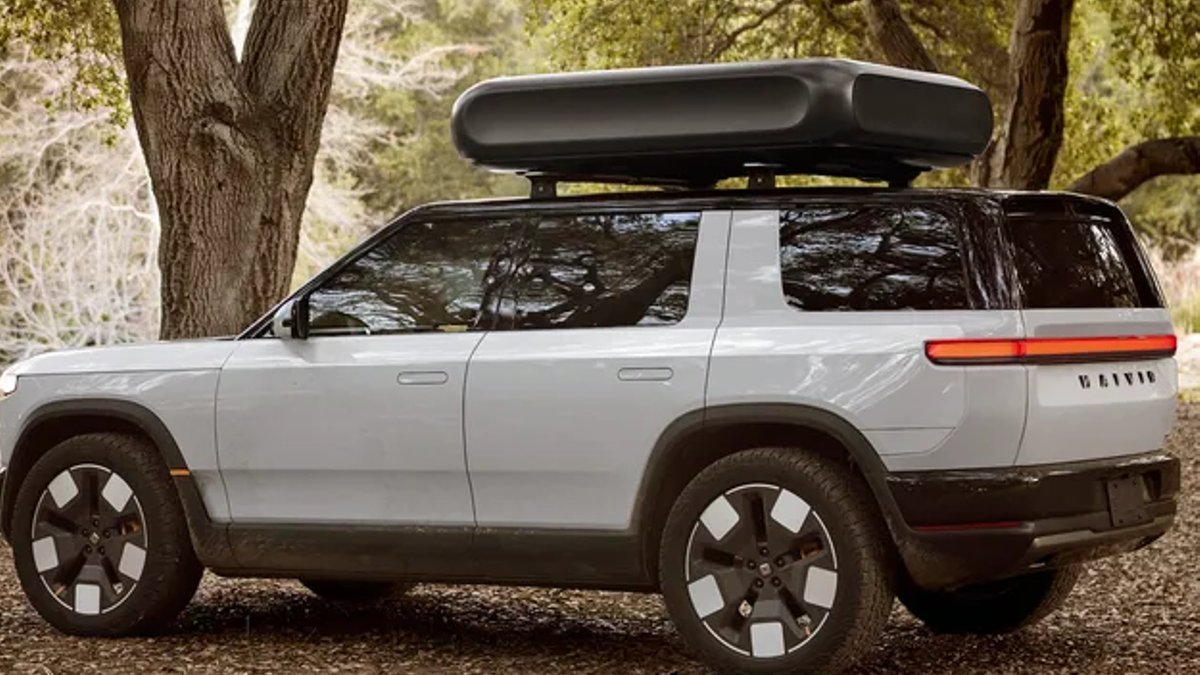
Rivian narrows its losses in Q2 as consolidated revenue jumps 27% year‑over‑year, according to the company’s earnings release on July 30.
Revenue climbs while the bottom line improves
The electric‑vehicle maker posted $1.6 billion in consolidated revenue for the second quarter, a rise of 27% compared with the same period last year. Of that amount, $1.1 billion came from its core automotive segment and $515 million from software and services.
Software revenue includes $308 million tied to Rivian’s joint venture with the Volkswagen Group, a figure highlighted by chief financial officer Claire McDonough during the earnings call.
Despite the revenue boost, the company recorded a loss of $36 million in the quarter, a sharp reduction from the $335 million loss reported in Q2 2025. The narrowing loss reflects higher delivery and production volumes, plus a one‑time inflow of $108 million from regulatory credits and a tariff refund receivable.
Production, deliveries and upcoming challenges
Rivian delivered 12,194 electric vehicles in the quarter, an improvement over its first‑quarter performance but still short of the long‑term targets. The firm expects to add a second shift to the R2 production line by the end of the third quarter, aiming to accelerate output.
McDonough warned that external cost pressures, including macroeconomic and geopolitical factors, are adding “complexity, cost and uncertainty” to the business. She also pointed to rising commodity and memory costs linked to Rivian’s autonomy platform.
In what the CFO called a “transition year” for 2026, Rivian recognized roughly $100 million in incremental costs tied to the R2 ramp‑up. She added, “We expect the complexity of a new vehicle launch will negatively impact our automotive gross profit in the third quarter, before becoming a benefit for our overall operations in the fourth quarter as we ramp production and deliveries.”
Related: Exploring the Engagement Rings of Germany’s Grand Duchesses
Rivian’s management continues to stress exit‑rate improvement as a path to full‑year profitability. The company’s leadership expects the R2 model to generate a positive gross profit as part of its 2026 exit‑rate goals.
Rivian’s trajectory mirrors other EV startups that have shifted from heavy early‑stage losses to tighter margins as scale takes hold. The pattern suggests that while short‑term earnings may still be negative, the underlying economics can improve once production bottlenecks ease and supply‑chain volatility subsides.
Guidance and financing outlook
Boosted by the R2 launch and higher deliveries, Rivian raised its full‑year delivery target to between 65,000 and 70,000 vehicles, up from the prior range of 62,000‑67,000. Founder and CEO RJ Scaringe said the new SUV “will resonate with a broad set of consumers” and serve as a “driver of Rivian’s long‑term growth and profitability.”
The company also announced plans for a more affordable rear‑wheel‑drive R2 version, priced at $44,900, slated for a 2027 release.
Financially, Rivian holds about $5.3 billion in cash and recently raised roughly $1.3 billion through a follow‑on offering of Class A shares. It expects to receive a $1 billion nonrecourse debt infusion from its software joint venture with Volkswagen and an additional $250 million equity investment from Uber.
Earlier this year, Uber committed up to $1.25 billion through 2031.


