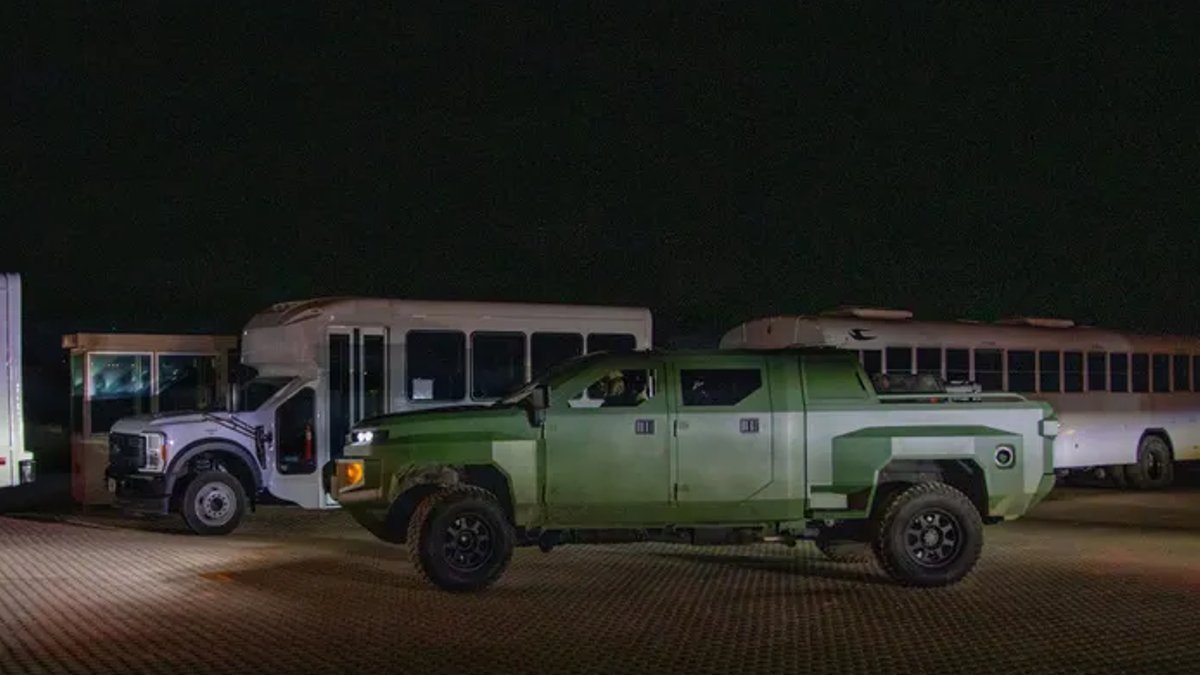
The U.S. Army has awarded prototype contracts to Ford Motor Co., GM Defense, and BC Customs to upgrade its Heavy Infantry Squad Vehicle. The military branch confirmed the decision in a statement Monday.
The three companies will each develop three prototypes of the ISV-H, a next-generation vehicle designed to meet specific performance benchmarks. One requirement is traveling 62 miles in eight hours on a three-quarters-full gas tank. The contracts also include right-to-repair provisions and data-sharing terms.
The first prototypes are due by March 30, 2027. After delivery, the Army’s Test and Evaluation Command will assess the vehicles. The winning design will receive a production contract for over 600 ISV-Hs.
Ford’s involvement falls under its Industrial Platform subsidiary, which adapts the company’s heavy Super Duty truck model for military use. James Farley, Ford’s president and CEO, mentioned the contract during an earnings call Tuesday but provided no further details. He stated that Ford is in ongoing discussions with the U.S. government about other defense-related opportunities.
“We believe we have a lot to offer,” Farley said. “This must be a strong business with good returns and capital efficiency.”
GM Defense views the ISV-H contract as part of a broader expansion into defense manufacturing. In June, it partnered with Lockheed Martin to apply automotive-scale production techniques to military hardware.
“Our joint objective is to explore applying the automotive industry’s high-rate manufacturing and supply chain expertise to defense production,” James Taiclet, Lockheed’s president and CEO, said during a July 23 earnings call. “We hope this effort will provide faster access to America’s commercial industrial base to accelerate output as demand grows.”
GM’s chairwoman and CEO, Mary Barra, said the company is working with other partners to improve speed, scale, and resilience in the defense industrial base. She described the effort as part of a long-term strategy to strengthen supply chains for U.S. and allied governments.
Related: Tokyo highway racer revives 90s nostalgia
GM Defense already handles contracts for the U.S. State Department, Secret Service, and agencies in Canada, Qatar, and Brazil. In May, it secured a $220 million deal to build NASA’s Lunar Terrain Vehicle. Barra expects the division’s revenue to reach nearly $700 million in 2026, with a compound annual growth rate exceeding 30% over the next few years. The ISV-H contract could exceed $1 billion based on the Army’s needs.
Not all of GM’s defense ventures are expanding. The automaker and Boeing recently sold their joint research venture, HRL Laboratories, to IBM. Originally founded as Hughes Research Laboratories in 1948, HRL had been a shared asset for advanced aerospace and defense research.
The Army’s push for new vehicles aligns with a broader trend of automakers engaging with the defense sector. Earlier this year, the White House discussed repurposing civilian factories for weapons production amid rising global tensions. While the ISV-H program focuses on troop transport, the shift reflects growing overlap between automotive and military manufacturing.
The new vehicles could improve deployment speed and reliability for soldiers. The Army’s focus on endurance, like the 62-mile range requirement, aims to reduce logistical strain during extended operations.
Prototypes won’t be ready until 2027.
The competition will test how well commercial automotive expertise adapts to military needs. The stakes are high: the winner will help shape how the Army moves its troops in the future.
The Wentzville plant has seen similar investments to modernize production lines for both civilian and defense applications.


