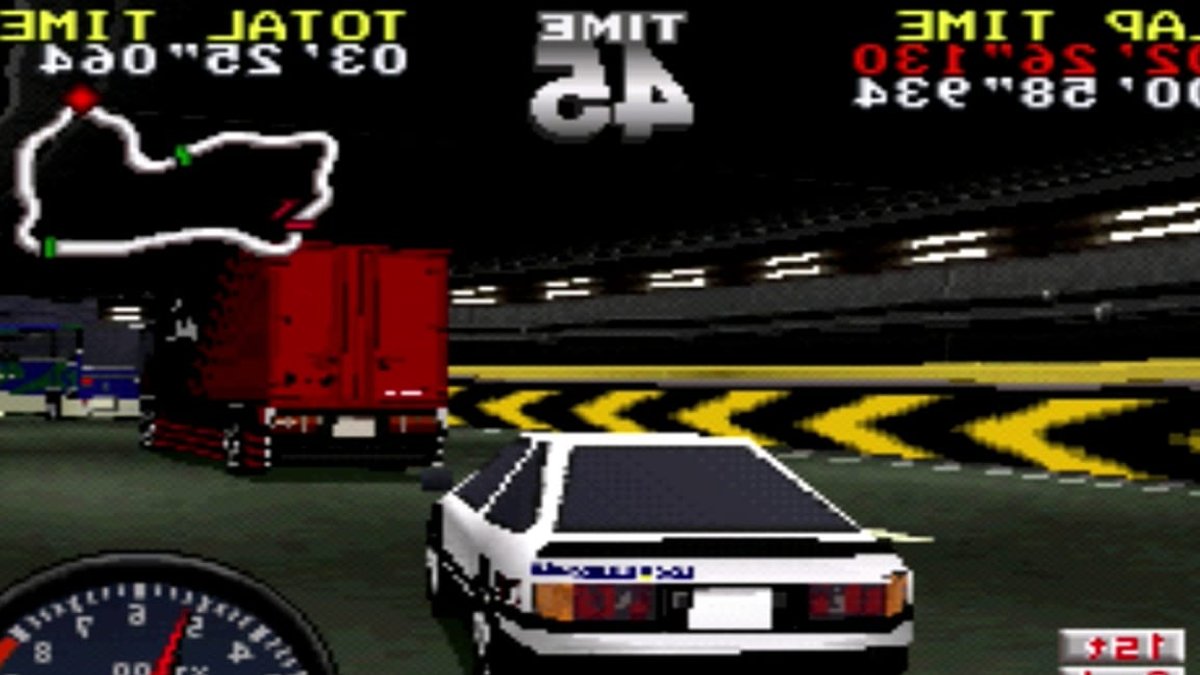
In 1996, a racing game called Tokyo Highway Battle arrived on PlayStation and Sega Saturn, introducing Western players to a style of street racing that had taken hold in Japan.
The game that brought Tokyo’s highways to the West
The title originated as part of the Shutokou Battle series, known in Japan as Shutokou Battle: Drift King. Japanese audiences had experienced this type of racing on high-speed roads since the Super Nintendo era, but international gamers encountered it for the first time with this release.
Races took place across three Tokyo routes, where players competed one-on-one while scything through commuter traffic. The main obstacle wasn’t just the opponent—it was avoiding crashes, especially with Yokohama Advan-branded lorries.
The physics felt basic compared to modern standards but still conveyed the weight of the car. Mistakes often led to collisions with guardrails or the rear of a truck.
A formula that refused to fade
Nearly three decades later, Tokyo Highway Battle remains a notable entry in racing games. Developer Genki brought the series back in 2025 with a new Tokyo Xtreme Racer, showing that the blend of city racing and unpredictable traffic still holds appeal.
For those unfamiliar with the original, its intro sequence serves as a snapshot of 1990s Japanese car culture. It features Keiichi Tsuchiya, the legendary “Drift King,” performing a casual burnout in a Nissan Silvia S14 at Tsukuba Circuit. The scene exudes nostalgia—no safety gear, just sunglasses and bright pink racing gloves.
The footage wasn’t filmed in Tokyo or on a highway, but the spectacle made up for the inconsistency.
For fans of the original, the 2025 reboot marked a return after years of anticipation.
The original release also reflected the car culture of its time. Its influence can be seen in later titles that emphasized urban environments.
Genki’s decision to revive the series reflected confidence in its enduring appeal. The reboot retained the core elements that made the original stand out.
Fans continue to revisit the game for its unique approach to racing.


