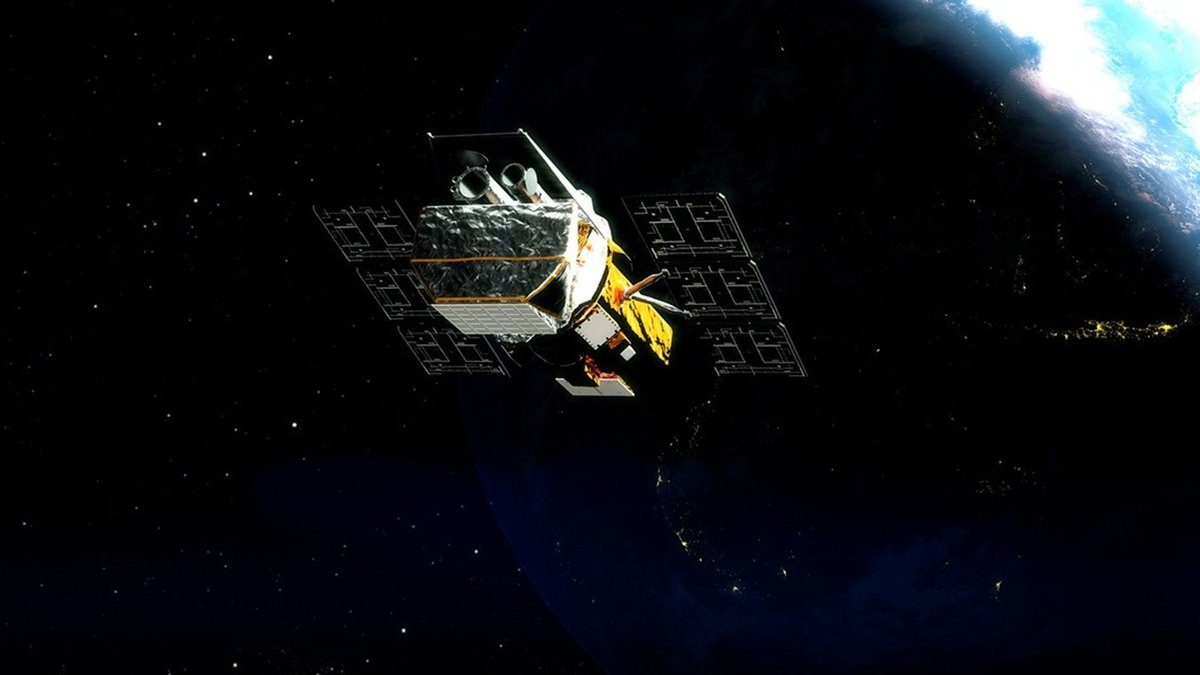
NASA’s Swift telescope returned to Earth’s atmosphere on Wednesday over Indonesia, but its uncontrolled descent carried a danger level five times higher than the agency’s own safety limits. NASA’s guidelines allow a maximum injury risk of 1 in 10,000 for uncontrolled satellite reentries, yet Swift’s reentry posed a 1 in 2,100 chance—well above the acceptable threshold. The agency acknowledged the assessment met launch requirements from 2004 but did not explain how such a high risk was permitted.
The telescope, deployed in 2004 to observe gamma-ray bursts, ran out of fuel and became an uncontrolled reentry. Earlier, NASA invested $30 million in a private mission to attach a rescue satellite to Swift, but the effort failed. Without propulsion, the telescope’s path was determined by orbital mechanics, leading to an uncontrolled fall.
NASA’s risk standards, last revised in 2021 but rooted in 2001 policies, set 1 in 10,000 as the highest allowable risk for uncontrolled reentries. The agency does not enforce legally binding de-orbiting rules, only statistical risk management. Over nearly 10,000 past satellite reentries, the odds have generally favored safety. However, Swift’s risk assessment was unusually vague: NASA did not release a detailed reentry prediction and only mentioned the raised 1 in 2,100 probability in passing during a separate announcement.
Read Also: Clean 2001 Audi A4 Avant Quattro for sale
No injuries were reported after Swift’s return. Most of the structure disintegrated during reentry, but dense parts like its telescope lens or reaction wheels might have survived. If debris landed near populated areas, no harm was recorded, though the absence of damage relied on chance rather than deliberate safety measures.
This situation reveals a broader issue: as thousands of satellites de-orbit each year, statistical protections may no longer be enough. Controlled reentries, using remaining fuel to direct debris into uninhabited ocean regions, could lower risks, but they demand advance planning. Some companies, including SpaceX, are testing satellites designed to completely burn up on reentry, though the environmental impact of large-scale metal vaporization has never been studied. The potential consequences for Earth’s atmosphere remain unknown.
Swift’s uncontrolled descent follows a pattern of similar satellite returns, each highlighting that space debris management depends on either luck or proactive measures. With orbital traffic increasing rapidly, the current reliance on 1 in 10,000 odds may no longer be sufficient. The next critical incident could have fatal results if no stronger actions are taken.


