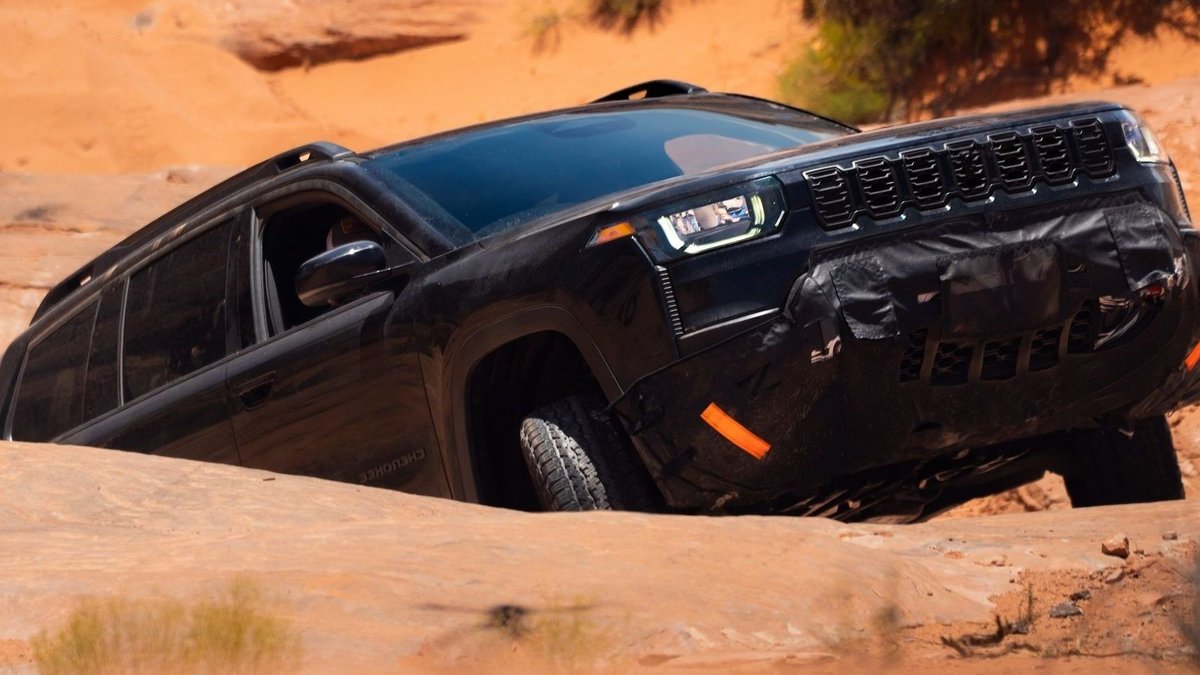
The 2027 Jeep Cherokee Trailhawk is finally getting the hardware it needs to handle rocky terrain. Jeep released a new teaser image showing the rugged SUV climbing a steep rock face during engineering validation testing. The photo offers a clear look at the upcoming model’s off-road capabilities, filling a gap in the Cherokee lineup.
A missing piece of the puzzle
The new Cherokee arrived without a Trail Rated trim. For a brand that built its reputation on conquering harsh environments, this omission seemed strange. The new Trailhawk version aims to fix that problem.
Today’s teaser shows a test mule, not a computer-generated image. The vehicle is climbing over large rocks in a dry, arid area. This location is likely Moab, a famous spot for slickrock off-roading.
The front of the vehicle is mostly covered in camouflage, but the wheels are visible. They feature a wide, aggressive all-terrain tread pattern. This tread type is a signature of previous Trailhawk models. The wheels also appear larger than those found on standard Cherokee trims, which typically wear 29-inch tires. The upgraded rubber alone should provide better ground clearance for handling obstacles.
Specs and performance
Details on the engine are scarce. The current Cherokee lineup uses a 1.6-liter turbocharged hybrid powertrain. This setup produces 210 horsepower and 230 lb-ft of torque.
It is possible the delay in launching the Trailhawk has to do with this hybrid powertrain. Packaging the complex hybrid system alongside heavy off-road hardware can be a difficult engineering challenge. Jeep officials have not confirmed any changes to the powertrain for the 2027 model.
Jeep has a strict process for the Trail Rated badge. The badge is earned only after a vehicle passes a checklist in five specific areas. These areas include traction, water fording, maneuverability, articulation, and ground clearance. The brand does not give the badge lightly, and it requires significant physical testing to verify the capabilities claimed on paper.
Related: Ontario Man Charged $1,130 for Long‑Gone Car
While the exact mechanical upgrades are under wraps, the visible change in wheel and tire size suggests the new Trailhawk is designed for serious rock crawling. The upcoming release should give owners a more capable option for extreme off-road adventures.
The Easter Jeep Safari connection
Automotive enthusiasts may recognize the test mule from the Easter Jeep Safari held earlier this year. At that event, Jeep displayed an “Upland Concept” that closely resembles the upcoming production model. This concept vehicle was described by spokespeople as a lightly camouflaged rig designed to demonstrate the new Trailhawk’s potential.
During the Safari, observers noted the unique 18-inch wheels fitted to the concept. These wheels supported the beefy Falken Wildpeak all-terrain tires. The tires on the concept measured just under 32 inches, a significant increase over the standard 29-inch rubber found on other trims. This larger footprint is critical for stability when traversing loose gravel or steep inclines.
The teaser image confirms that Jeep is refining this platform for the final production run. The camouflage applied to the front fascia obscures the approach angle, but the jaunty wheel angle in the photo hints at steeper angles than the standard model. This geometry is essential for clearing obstacles without damaging the front bumper or skid plates.
Regarding the powertrain, the hybrid system presents unique challenges for off-road applications. The complexity of the electrical components requires careful packaging to ensure they remain protected during extreme articulation. Jeep engineers must ensure the suspension can handle the weight of the hybrid system while maintaining the necessary articulation for the Trail Rated certification.
The Trail Rated badge represents a rigorous standard of quality. The testing involves specific metrics for traction, water fording, maneuverability, articulation, and ground clearance. While not every model passes every test with the same intensity, the badge serves as a promise to the buyer that the vehicle can handle the environments for which it was designed.


