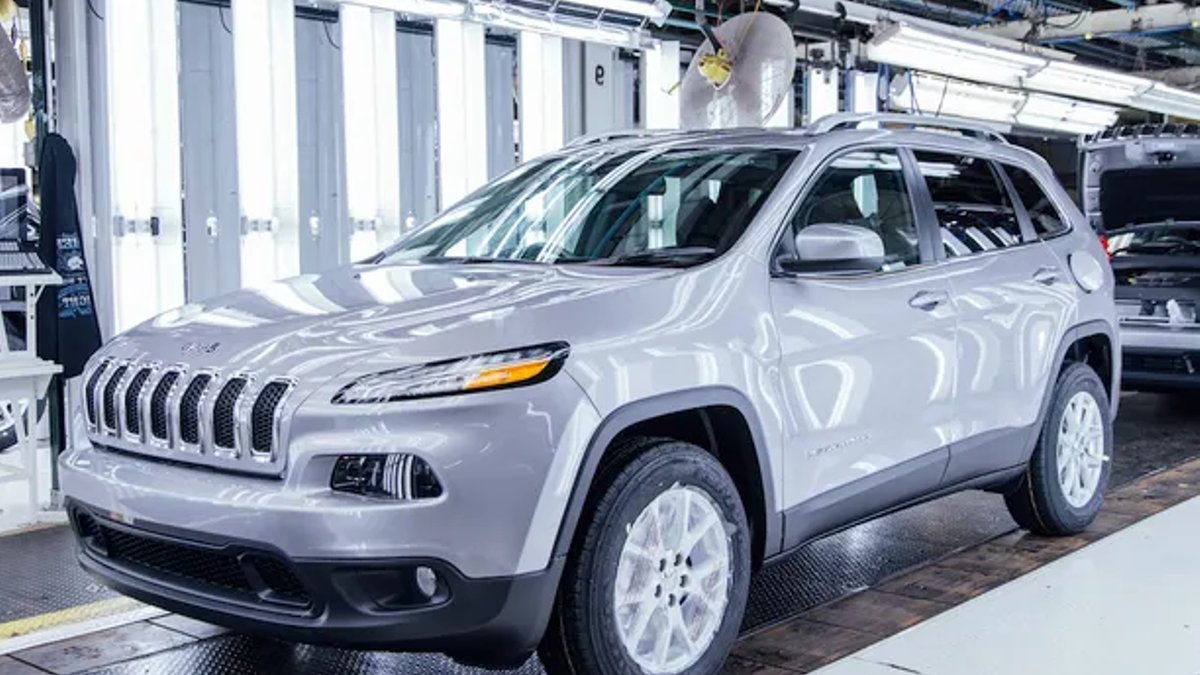
The next-generation Jeep Cherokee will be built at Stellantis’ Belvidere, Illinois, assembly plant, as confirmed in a mid-August announcement. It will mark the first U.S.-market vehicle to use the company’s new STLA One platform.
Pilot production begins in the first half of 2028, with full series production targeted for the second half of 2029. The plant is expected to assemble at least two vehicles on the STLA One architecture.
Investment climbs to over $800 million
Stellantis increased its planned investment in the Belvidere facility to more than $800 million, up from $600 million announced in October 2025. The adjustment is part of a broader $13 billion commitment to expand U.S. manufacturing capacity.
In July 2024, the automaker received $335 million from the Department of Energy to help convert the idled plant for electric-vehicle production. The grant was part of a $1.7 billion program aimed at reviving shuttered or at-risk auto factories.
Like other major automakers, Stellantis later reduced its electrification plans. In February, it wrote off roughly $26 billion in EV-related investments originally planned between July 2021 and 2026. The cuts included battery-technology development and new EV platforms.
The Belvidere plant, about 60 miles west of Chicago, has been idle since February 2023 after production of the fifth-generation Jeep Cherokee ended. Its revival is now central to the FaSTLAne 2030 strategy, unveiled in May, which aims to boost sales and profitability in North America.
“Launching the next-generation Cherokee on STLA One allows us to deliver a more competitive product while leveraging the strength of our U.S. manufacturing operations,” said Stellantis CEO and North America COO Antonio Filosa. The move supports long-term stability for employees, customers, and stakeholders.
A single platform for global vehicles
The STLA One architecture consolidates five existing Stellantis platforms into one modular system. The company states this will reduce complexity, shorten time to market, and improve cost efficiency by up to 20%. It covers global B, C, and D segment vehicles—small to midsize models.
The Belvidere facility will produce all powertrain versions of the next-gen Cherokee across two shifts. While no all-electric variant has been confirmed, the DOE grant suggests some EV production is likely.
When the $600 million investment was first announced last October, Stellantis projected restarting production in 2027 and adding roughly 3,300 jobs. The timeline has since slipped by about a year, with pilot production now set for early 2028.
For the displaced UAW workers laid off when the Belvidere factory was idled in 2023, Stellantis says it remains committed to supporting those who have been awaiting reopening.
Some displaced workers were offered transfers to other plants in Indiana and Ohio. Temporary relocation opportunities will be provided as the Belvidere restart approaches.
Stellantis plans to invest 60 billion euros ($69.7 billion) over the next five years to accelerate growth and profit under its FaSTLAne 2030 strategy. About 60% of that funding will promote its brands and products, while the remaining 40% will go toward new vehicle platforms, technologies, and shared assets. North America currently accounts for 40% of revenue.
The strategy reflects broader industry challenges. Automakers initially raced to electrify their lineups, but slower adoption and high costs led many to delay or scale back plans. A flexible platform like STLA One allows for both internal-combustion and electric vehicles without locking into a single powertrain.
Belvidere’s revival offers a rare positive development for a region hit by multiple plant closures. The facility’s return could stabilize the local economy, though the delayed timeline means workers face another year of uncertainty.
Trade groups have warned that aggressive EV discounts may not be sustainable long-term.


