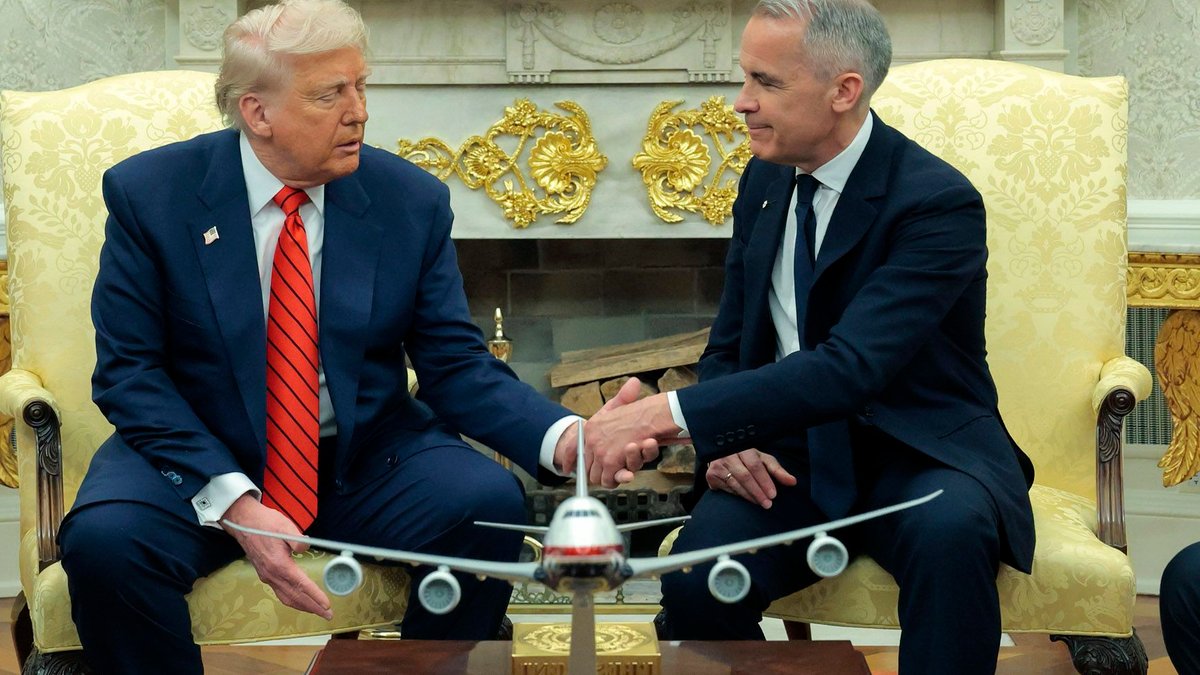
The White House and Ottawa reached an agreement to reduce tariffs on Canadian-made vehicles exported to the United States, though key details remain unresolved.
One figure stands out amid uncertainty
Officials confirmed the nominal tariff rate on Canadian-built cars will fall to 15%. Beyond that, little is settled. The main disagreement involves what automakers can subtract from that rate to lower their actual duty.
Related: Perception of reckless driving varies widely
The U.S. insists deductions should apply only to parts manufactured within its borders. Canada and Mexico advocate for Regional Value Content (RVC), allowing parts from any of the three nations to count. The gap is significant: RVC deductions could push the effective tariff as low as 2.5%–4%, a level Canadian automakers consider viable. If only U.S.-made parts qualify, the rate climbs to 7.5%–9%.
Ford’s Oakville assembly plant depends on cross-border supply chains. A 9% tariff would increase costs by thousands per vehicle, making Canadian production less competitive than U.S. or Mexican facilities.
Rules of origin still in flux
Existing trade rules mandate 75% of a vehicle’s parts originate in North America to qualify for tariff benefits. The U.S. proposed raising that to 82% and adding a new requirement: 50% American content. The ambiguity lies in whether that 50% applies to the car’s total value or just the RVC portion.
Related: US Army taps Ford, GM for prototype deals
If it refers to the entire vehicle, Canadian automakers would face difficulty meeting the threshold. If limited to the RVC share, the effective American content requirement drops to 37.5%–41%, a more realistic target. Negotiators have not clarified which interpretation they intend to use, leaving manufacturers uncertain.
Details remain unresolved
The basics of the rules of origin governing auto parts is fairly simple, with “American content” being fairly self-explanatory and “Regional Value Content” simply the value of the parts made in Mexico, Canada, or the United States used in a locally assembled vehicle.
Related: Mercedes-Benz merges gas and EV models in new GLA lineup
Exactly what percentage of the total each must represent to be compliant is still a mystery. Current rules say 75% of those constituent parts must be built by one of the three signatories. However, the Americans have proposed bumping that RVC requirement up to 82% and adding a new rule, that American content needs to be 50%.
For now, uncertainty prevails. The agreement’s framework exists, but the specifics that will determine whether Canadian automakers remain viable are still unresolved. Until those details are finalized, the deal remains largely symbolic.


