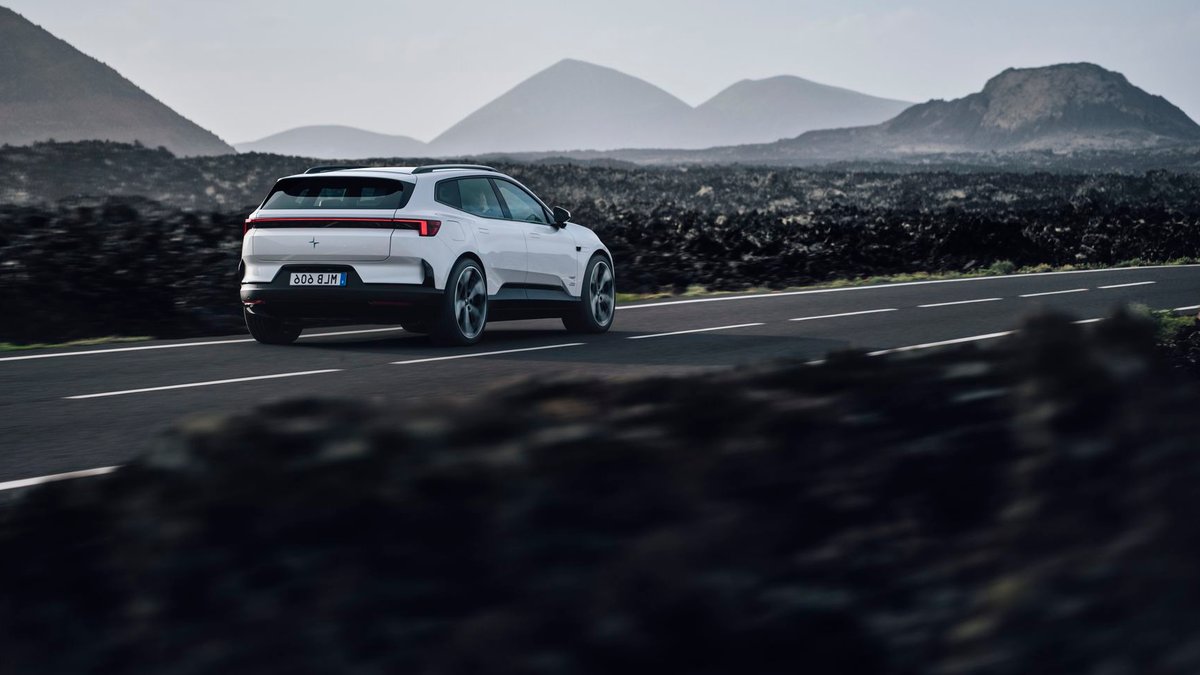
Polestar is expanding its electric lineup with the 2027 Polestar 4 SUV. The company confirmed that a tall wagon variant of its existing coupe will join the roster. This newest entry features a straighter roofline and an upright tailgate, distinguishing it from its sibling.
It is a bit strange that the rear window is considered a major feature, as the coupe sibling lacked one entirely. The new model also gains full-length roof rails with a 100 kg capacity and a more practical upright tailgate. While the front doors are shared, the shape of the roof changes the silhouette from a sports coupe to something more utilitarian.
Dimensions and Design
The taller roofline adds 250 mm of headroom in the rear. A panoramic glass roof stretches the full length of the cabin to the tailgate, creating a roomier feel for passengers. Exterior colors include a bright silver-green called Aurora and a silver-purple shade named Ozone, which is available with a matte finish.
Rear cargo volume reaches a maximum of 655 litres with the seats up, expanding to 1,665 litres when the 60-40 rear seats are folded. This shift from coupe to SUV form factor suggests a prioritization of daily usability over the sleek, low-slung aesthetic that defined the original’s identity. For families needing more vertical space, the trade-off is a slightly heavier silhouette that might not appeal to traditional sports car enthusiasts.
Related: Mitsubishi revives Pajero for Asian and Australian markets
Powertrain Options
The 4 SUV will be built in Busan, South Korea. It offers two distinct powertrain options: a single-motor rear-wheel drive version and a dual-motor all-wheel drive model. The RWD setup produces 272 horsepower and 253 lb-ft of torque, accelerating from zero to 100 km/h in 7.3 seconds.
The AWD version packs a total of 544 hp and 506 lb-ft of torque, slicing that time down to 3.9 seconds. A performance package is available for both trims. It adds ZF active dampers, Brembo brakes, and 22-inch wheels with Pirelli P Zero performance tires, along with all-gold seatbelts and a rotary knob.
Battery and Charging
Both versions use a 100-kWh battery that supports DC fast charging up to 200 kW. AC charging speeds vary by region; Canada limits AC charging to 11 kW. In Natural Resources Canada’s testing, the RWD model is rated at 499 km on a full charge, while the AWD trim is good for 451 km. The range drops to 410 km with the performance pack installed.


