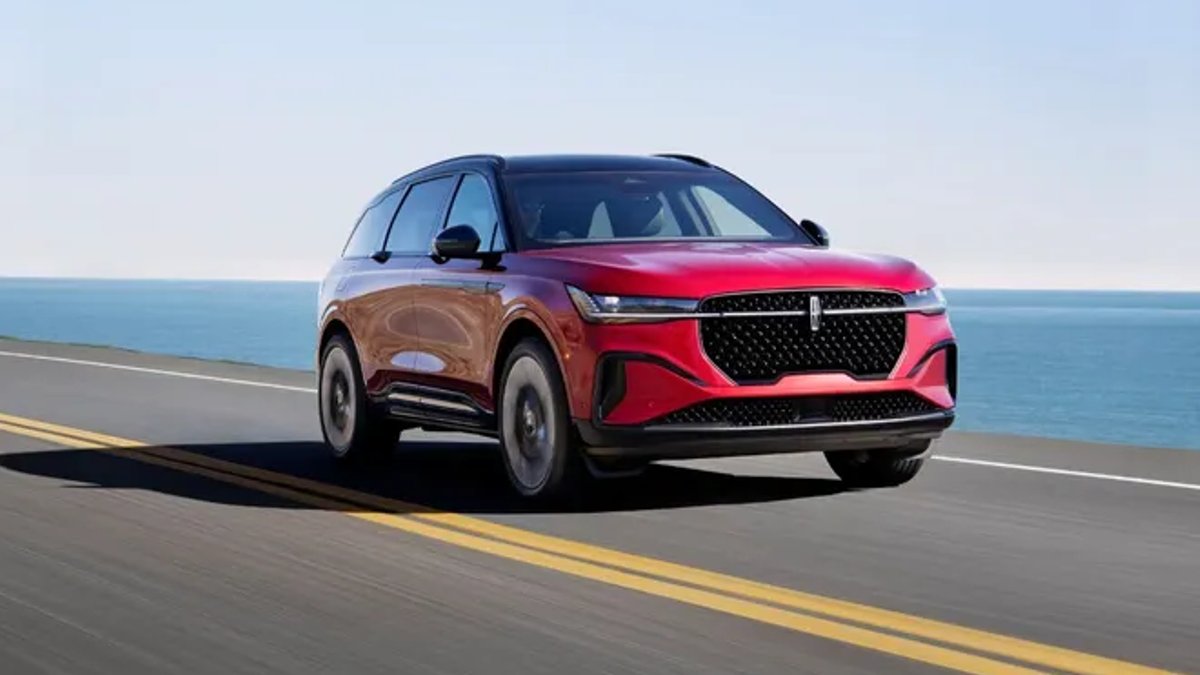
Ford plans to phase out China-built Lincoln models for the U.S., a move that will shift production of its luxury SUVs back to domestic plants beginning in 2030.
Shift away from Chinese imports
The automaker announced it will stop importing the midsize Lincoln Nautilus from its joint‑venture plant in Hangzhou, China. The vehicle is currently assembled by the 50/50 partnership between Ford and Changan Automobile. Import duties on the model sit at 52.5 percent, a rate that has made the vehicle costly for American buyers.
Ford says the transition will generate thousands of direct and indirect jobs in the United States.
The company highlighted that it produced more than 2 million vehicles on American soil last year, a volume that tops all other manufacturers.
Domestic assembly locations
Two other Lincoln models—the Navigator and Aviator—remain built in the United States. The Navigator is produced at the Kentucky Truck Plant in Louisville, while the Aviator rolls out of the Chicago Assembly Plant. Both SUVs are exported to markets including Canada, Mexico and the Middle East.
Related: Sonic Automotive targets sweet spot of used car market
Ford’s decision aligns with a broader strategy to increase domestic manufacturing. By 2030, the company expects to have all Lincoln SUVs assembled in the United States, eliminating the need for Chinese‑origin parts that fall under the newly‑finalized Connected Vehicles Rule.
The rule, effective January 2025, restricts vehicles equipped with connected‑vehicle technology that links to China. The Department of Commerce cited security concerns around Bluetooth, cellular or satellite connections that could interact with autonomous driving systems. This regulatory environment contributed to the phase‑out plan.
In a statement, CEO and President Jim Farley said, “Lincoln is a quintessentially American brand, and Ford is America’s automaker. This wasn’t necessarily the easiest path. In fact, it’s a path most of our competitors aren’t choosing to take.” He added that the company “builds in America because we believe in America, and we’re betting on that belief again.”
While Ford reshapes its supply chain, rival General Motors extended its joint venture with SAIC Motor through 2047, focusing on Buick and Cadillac models in China. GM also plans to shift production of the Buick Envision SUV from Shanghai to its Fairfax Assembly plant in Kansas City, Kansas, starting in 2028. The Envision, like the Nautilus, has faced high U.S. tariffs that pushed its price up by roughly $5,000.
Ford’s broader international moves include a joint venture with Geely Auto to produce vehicles at its Valencia, Spain plant for the European market. The partnership will see a new Bronco family member and a multi‑energy crossover from Ford, while Geely will add two electric SUVs to its lineup, with production slated for 2028.
Comparing this shift to past industry trends, the decision mirrors earlier efforts by U.S. automakers to localize production when trade barriers rise. Historically, manufacturers have moved assembly closer to key markets to avoid tariff exposure and regulatory hurdles, a pattern that repeats here as Ford re‑positions its luxury line.
Related: Stellantis sells car‑sharing unit to focus core
The Hangzhou facility, opened in 2015, currently builds the Lincoln Nautilus alongside the Ford Explorer and Edge L SUVs for the Chinese market. Under the new plan, those Lincoln units will be produced at existing U.S. plants, though Ford has not disclosed which facilities will take on the additional capacity.
Analysts note that the move could tighten supply chains for Ford’s luxury segment, potentially improving profit margins by reducing tariff costs. However, the transition will require retooling and workforce adjustments at domestic sites, factors that could affect short‑term output.
The recent Department of Commerce decision blocked electric‑vehicle maker Polestar from selling models linked to Chinese connectivity after 2026. The restriction highlights growing regulatory scrutiny over cross‑border data flows in the automotive sector.
Ford is monitoring the impact of the Connected Vehicles Rule and related trade policies.
The shift signals that Ford is prioritizing American manufacturing amid a changing worldwide car industry.


