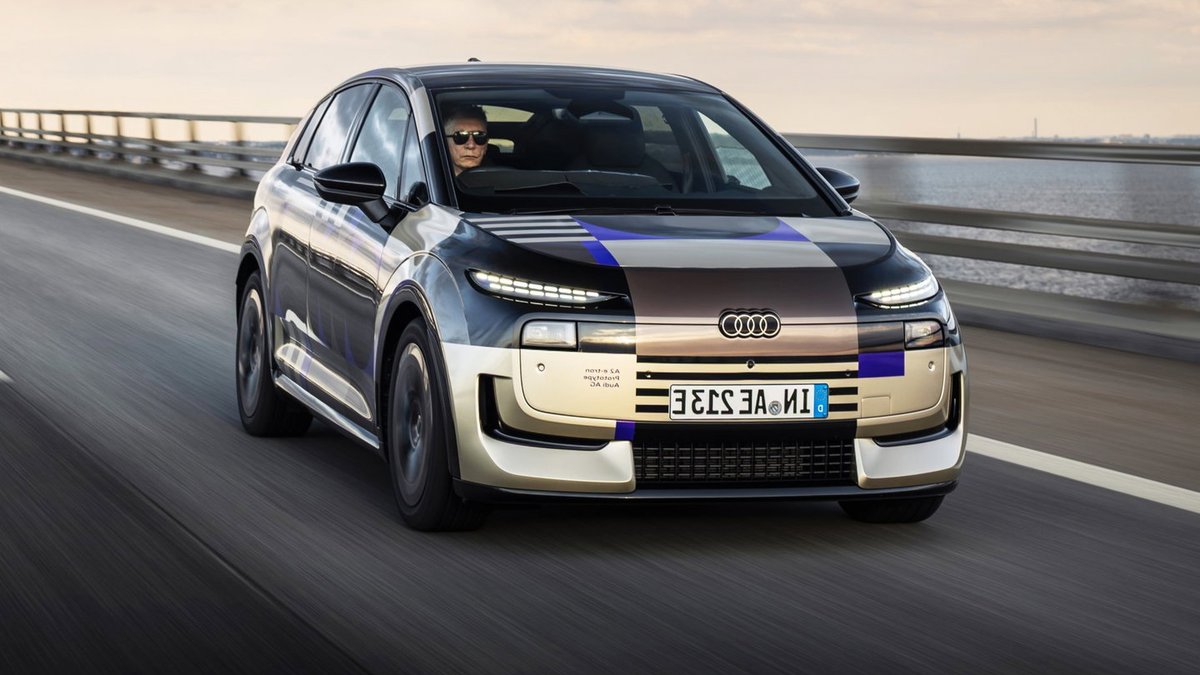
Audi has unveiled its new A2 model, an all-electric revival of the early 2000s cult classic. The car retains the original’s distinctive shape, including its snub nose, curving roofline, and split rear windscreen. This design is not just nostalgic but also functionally significant, as it inherently supports better aerodynamics, a key focus for the new model.
Design and Aerodynamics
The new A2 prioritizes aerodynamics, achieving a drag coefficient of 0.24. This is an improvement over the original model’s slipperiest versions, which had a coefficient of 0.25. The design includes active grille shutters that close when not needed to smooth the front end, aero wheel covers that reduce turbulence around the wheels, and a flat underbody that minimizes air resistance. These features collectively contribute to the car’s efficiency and performance, ensuring it cleaves through the air with minimal resistance.
Read Also: Bugatti Unveils Destrier, a Medieval-Inspired One-Off Hypercar
The car’s styling appears transitional, blending Audi’s recent angular front-end designs with a cleaner, more monolithic rear-end look, previewed in the Concept C and Nuvolari supercar. The front end, with its sharper lines and more defined angles, aligns with Audi’s current design language, while the rear end hints at a future direction for the brand, emphasizing simplicity and a more unified aesthetic. This blend of old and new reflects Audi’s careful balance between honoring its heritage and innovating for the future.
Technical Specifications
The A2 is built on the MEB platform, shared with the Volkswagen ID3 and Cupra Born. This platform is renowned for its flexibility and efficiency, making it an ideal choice for compact electric vehicles. The car features rear-wheel drive with a single electric motor on the rear axle, a departure from the original A2’s front-wheel-drive setup. This configuration not only simplifies the drivetrain but also optimizes weight distribution for better handling.
Audi has focused on efficiency, utilizing silicon carbide semiconductors that significantly reduce switching losses compared to traditional silicon technology. Additionally, thinner laminations (0.2 mm instead of 0.3 mm) in the motor reduce iron losses, further enhancing efficiency. The 61kWh lithium-ion phosphate battery is projected to deliver 4.9m/kWh efficiency, resulting in a provisional range of 299 miles. This efficiency is particularly impressive given the car’s compact size and should place it ahead of its platform-mates in terms of range, especially if larger battery options become available.
Read Also: Clarke FP300 Foot Pump Offers Affordable Inflation Solution
Release and Availability
The new A2 will be fully revealed in the autumn, with European sales starting by the end of the year. Pricing is expected to begin in the high £30,000 range, positioning it competitively within the compact electric vehicle segment. This price point reflects Audi’s aim to make electric mobility more accessible without compromising on quality or performance.
While the car won’t officially reach North American shores, enthusiasts may find solace in the fact that the original A2 is now eligible for US imports due to its age, having surpassed the 25-year threshold required by US regulations. This provides a unique opportunity for collectors and fans to own a piece of Audi’s history while awaiting potential future developments in the brand’s global electric vehicle strategy.


