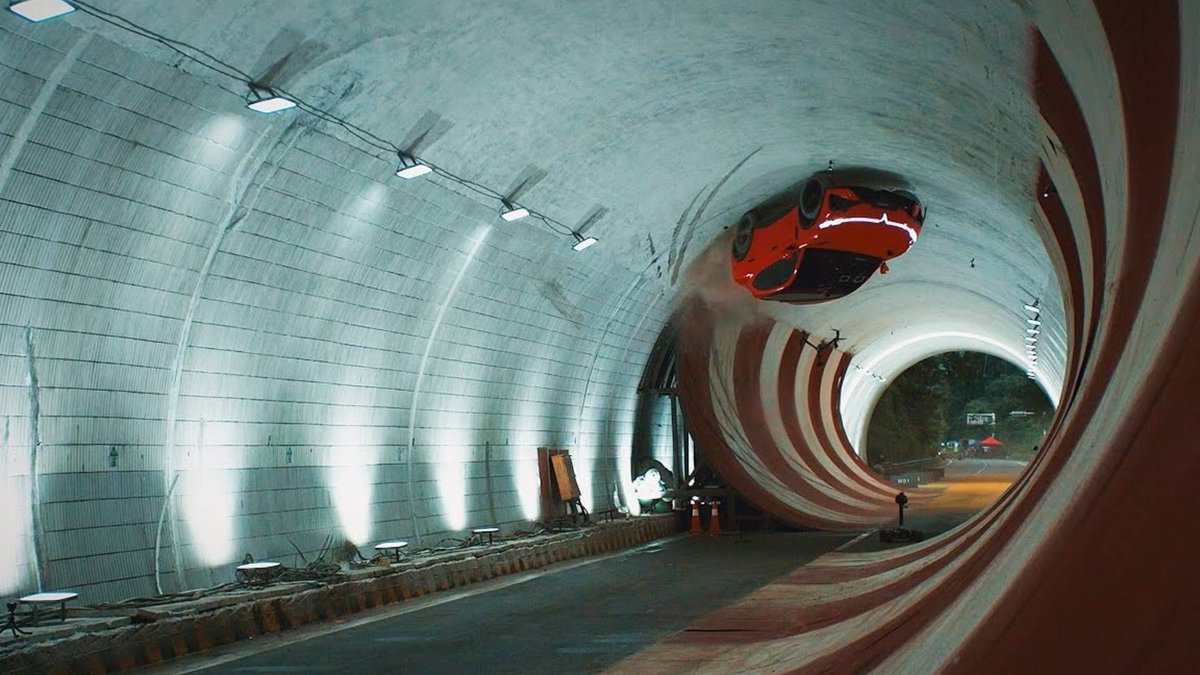
A Chinese electric vehicle has reportedly pulled off a stunt once reserved for high-performance gasoline cars: driving upside-down through a 360-degree tunnel loop.
The stunt that left skeptics speechless
The 2027 Voyah Passion S, an all-electric SUV from Chinese automaker Voyah, was filmed entering a closed tunnel at roughly 81 mph (130 km/h) and completing a full vertical loop. The vehicle climbed a ramp braced against the tunnel walls, rolled across the ceiling, and descended a second ramp to return to the road.
Voyah, a subsidiary of Dongfeng Motor, released the footage last week, timing it with the debut of the Passion S. The company claimed the stunt was performed without digital effects or cuts—though leaked video suggests it wasn’t flawless.
In a separate clip posted by CarNewsChina, an earlier attempt shows the EV stalling at the top of the loop and crashing onto its roof. The failed run, which Voyah did not publicly acknowledge, appears to have been part of the testing process. The automaker later shared unedited footage of the successful attempt, though slow-motion review reveals the car briefly losing contact with the ceiling and landing hard on its return.
Related: What we know about the new Toyota MR2
The stunt was inspired by a 2010 demonstration by Mercedes-Benz, when Formula 1 driver Michael Schumacher piloted an SLS AMG through a similar loop. Voyah’s version, however, leaned heavily into national pride, with on-screen text emphasizing Chinese engineering precision. The company noted that exact speed and steering inputs were critical—deviations could have sent the car tumbling.
A $58,000 SUV built for stunts—and daily driving
The 2027 Voyah Passion S, revealed alongside the stunt, is positioned as a high-performance electric SUV. The dual-motor all-wheel-drive variant produces 637 horsepower and 564 lb-ft of torque, accelerating from 0 to 62 mph (100 km/h) in 4.5 seconds. Range is estimated at 391 miles (630 km) on a single charge, and the starting price is approximately 279,900 yuan ($57,700 CAD).
Voyah offered no explanation for why the Passion S was chosen for the stunt, though its power and weight distribution likely played a role. The company has not disclosed whether the test vehicle was a production model or a modified prototype. The leaked crash footage suggests the car sustained significant damage during the failed attempt, raising questions about structural reinforcements.
This isn’t the first time an EV has attempted a gravity-defying maneuver. Skeptics called it AI, but leaked footage shows at least one failed attempt with a car smashing down on its roof.
Related: Penske profits from lease returns surge
The Passion S itself is a sleek, fastback-style SUV with a focus on performance and range. Its design language borrows from European luxury brands, though its engineering is distinctly Chinese. The company has not announced plans to sell the model outside China, though its parent company, Dongfeng, has a growing international presence.
Skepticism lingers despite unedited footage
Initial reactions to the stunt were mixed. Some viewers accused Voyah of using CGI, pointing to the polished final video and the lack of visible suspension compression during the ceiling phase. The leaked crash footage, however, undercut those claims, showing the physical risks involved.
The unedited footage of the successful run, while less dramatic, reveals a less-than-perfect execution. The car’s tires appear to lose contact with the ceiling for a split second, and the landing is visibly jarring. Voyah’s insistence on “no effects, no cuts” may have been technically true, but the final presentation still benefited from careful editing.
For now, the stunt remains a marketing win for Voyah, reinforcing its image as a brand pushing the limits of EV technology. Whether the Passion S can deliver the same level of excitement on public roads—without the safety of a closed tunnel—remains to be seen.


