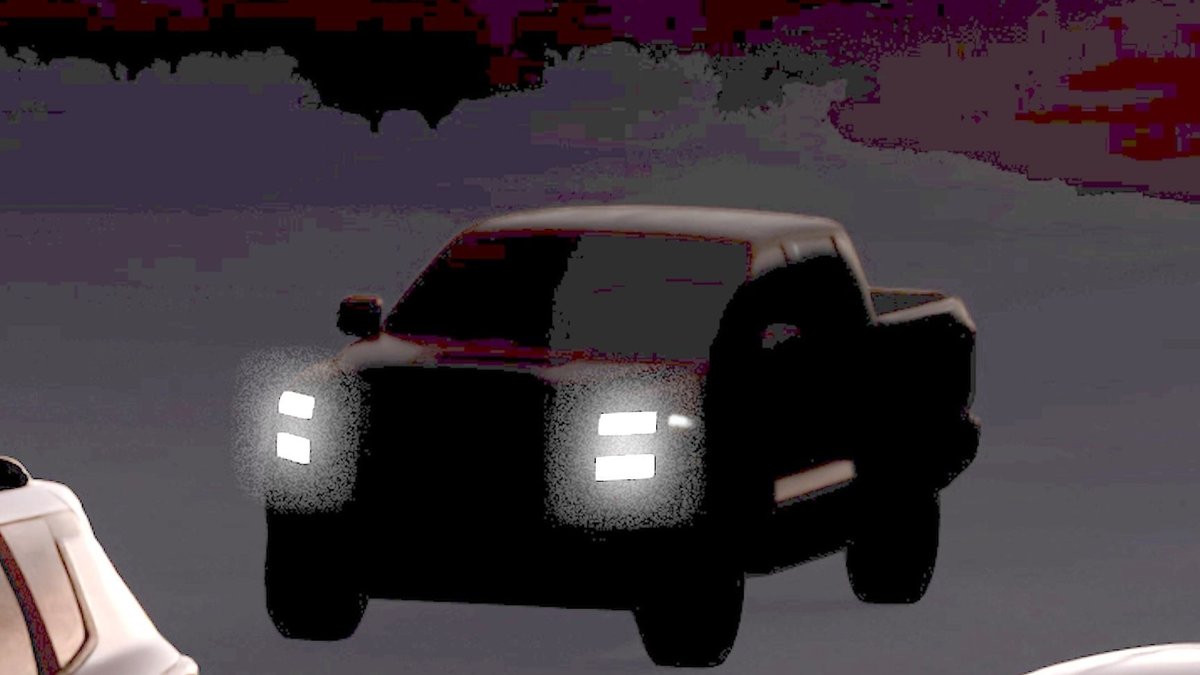
Mitsubishi’s recently refreshed “Momentum 2030” roadmap signals a decisive shift toward a broader, more electrified portfolio, and the accompanying teaser image has begun to peel back the veil on what could soon occupy showroom floors. The document itself stresses a “renewed and expanded product lineup” while also flagging ambitions to modernize the retail experience and accelerate the rollout of electric and plug‑in models. That strategic language now has visual confirmation, as a digitally brightened version of the teaser reveals silhouettes that hint at concrete additions rather than abstract concepts.
Dominating the rear‑most row of the composition is a midsize pickup that immediately calls to mind the current Nissan Frontier. Its proportions, cab shape, and rear‑bed dimensions align closely with that platform, yet the lighting and badge‑free treatment suggest Mitsubishi‑specific styling cues—distinctive headlamp signatures, a revised grille, and subtle trim accents that would differentiate it from its Nissan counterpart. Historically, the two manufacturers have swapped bodies and powertrains, producing badge‑engineered twins such as the electric Eclipse Sportback (originally the Nissan Leaf) and the Nissan Rogue PHEV, which began life as a Mitsubishi Outlander PHEV. This lineage makes the prospect of a Mitsubishi‑branded pickup a logical extension of an already proven collaboration framework.
If the silhouette proves to be a new truck, enthusiasts may anticipate a nod to the brand’s heritage through a name like “Raider,” echoing the moniker of past Mitsubishi pickups that once roamed North American roads. Such a name would reinforce continuity while also positioning the vehicle as a modern workhorse equipped with contemporary powertrain options—potentially a conventional internal‑combustion engine, a hybrid system, or an all‑electric drivetrain, each aligning with the broader electrification thrust outlined in the Momentum 2030 plan.
Flanking the pickup, the image showcases a compact crossover whose rear‑pillars bear a striking resemblance to those of the latest Nissan Kicks. This visual clue points toward a possible “Mitsu‑fied” version that could step into the role currently held by the aging RVR. By leveraging the Kicks’ proven architecture, Mitsubishi would gain immediate access to a fuel‑efficient, urban‑oriented platform that already benefits from Nissan’s recent safety and infotainment upgrades. Introducing a rebranded Kicks variant could refresh the brand’s compact SUV offering without the need for a ground‑up development cycle, thereby accelerating its entry into a highly competitive segment.
Related: Chinese EV reportedly pulls off upside-down loop
Further back in the composition, a massive SUV silhouette looms, its bulk and roofline reminiscent of the Nissan Armada. Should this be a Mitsubishi iteration, it could serve as a vehicle to resurrect the storied “Montero” badge for the North American market—a name that still resonates with off‑road aficionados despite its recent dormancy. An alternative could be the reintroduction of the “Pajero” nameplate, which continues to be used in other regions, though market sensitivities might steer the decision toward the more globally recognized Montero identity. Either way, the presence of such a large‑scale model would fill a noticeable gap in Mitsubishi’s current lineup, offering a true flagship that complements the brand’s midsize and compact offerings.
The teaser also confirms the continued prominence of the Outlander family within the upcoming range. Both the conventional gasoline variant and the plug‑in hybrid version appear, showing the model’s role as a cornerstone of Mitsubishi’s crossover strategy. The plug‑in hybrid, in particular, has demonstrated robust market acceptance, reinforcing the brand’s ability to deliver efficient powertrains without sacrificing practicality. By retaining both powertrain options, Mitsubishi signals its commitment to catering to diverse consumer preferences while still pushing the envelope toward full electrification.
Beyond the vehicle silhouettes, the Momentum 2030 plan’s emphasis on modernizing the retail sales model hints at a shift toward a more digitally integrated buying experience. This could involve enhanced online configurators, virtual showrooms, and streamlined financing processes that align with broader industry trends. Coupled with the planned expansion of the model roster, such initiatives aim to make Mitsubishi more accessible to a tech‑savvy customer base that expects convenience alongside product variety.
For readers eager to track these developments, signing up for the Blind‑Spot Monitor newsletter and following Mitsubishi’s social channels on X, TikTok, and LinkedIn will provide timely updates. As the brand moves from teaser to tangible offerings, the convergence of shared platforms, revived nameplates, and a clear electrification pathway suggests a revitalized chapter for Mitsubishi in the competitive North American market.


